
Cheese
Raw Milk, Pantyhose, and Time

In the fall of 2017, right before I moved from Chicago to NYC, I convinced three of my best friends to join me in Paris for a road trip through Western Europe. Truth be told, my secret motivation for the trip was to reunite with a French lady I had fallen deeply for years earlier, in Brazil; when that fell through — which it very much did — I rebounded directly into the arms of the nearest available lover: cheese.
At Fromagerie Beillevaire, the first cheese shop we visited in Paris, I met a cheese that really swept me off my feet: Roquefort Carles1. It was a punk rock cheese — tall, creamy white and chasmed through with foreboding molded veins of deep ocean blues and greens; all salty grit and metal rot, slick and fragile and ready to crumble, the dark tunnels of penicillium roqueforti burrowed into its ghostly facade like abysmal cigarette burns in ivory fabric. The flavors were so foreign to me — they confounded me, excited me, filled me with curiosity. I had to have more. And so, this one cheese transformed our entire trip: it kicked off a veritable cheese bacchanalia that would thrust me and my friends on a dairy-induced loop from Paris to the Italian Alps, down through Provence and the Pyrenees, into the Basque Country, up through Bordeaux and back to Paris again.
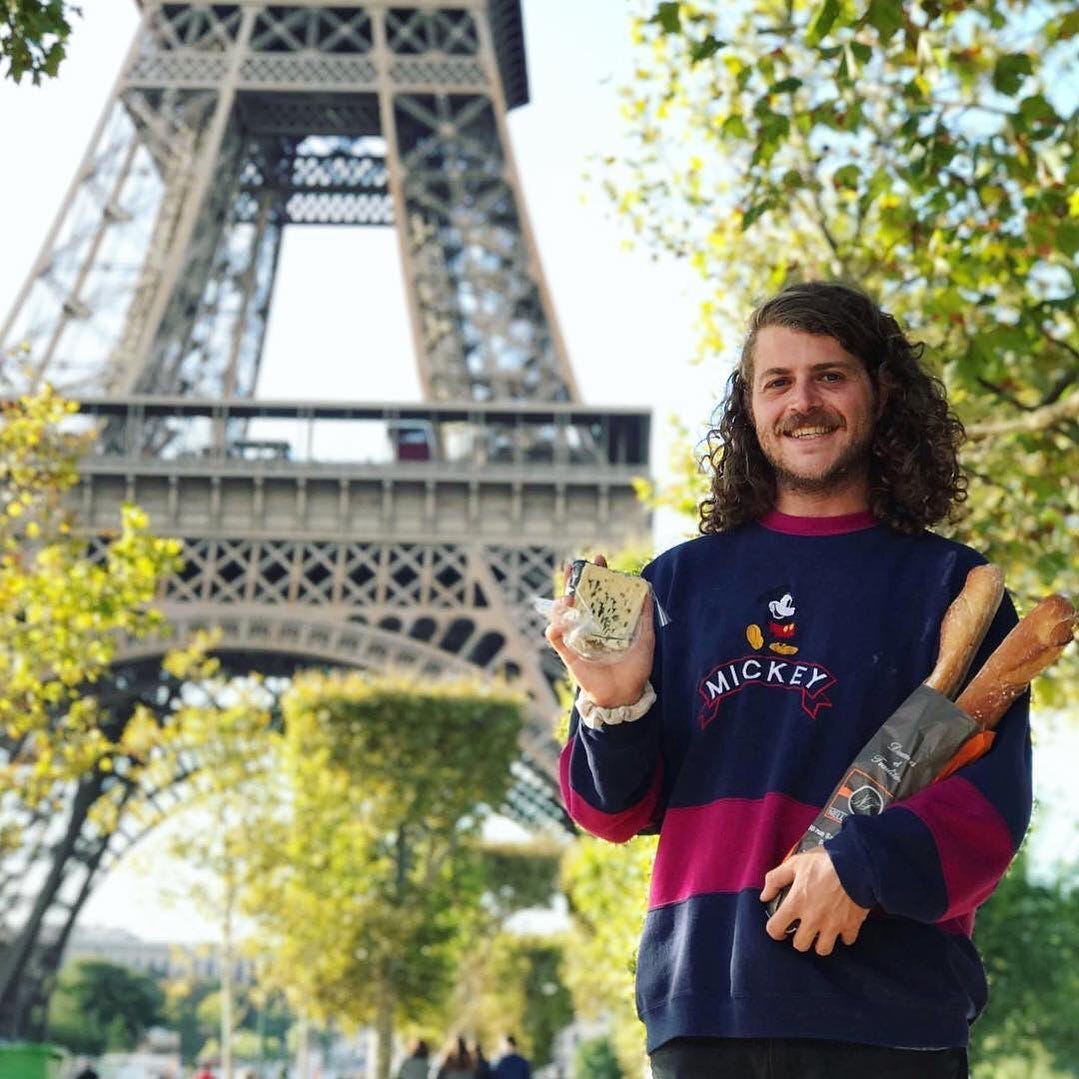
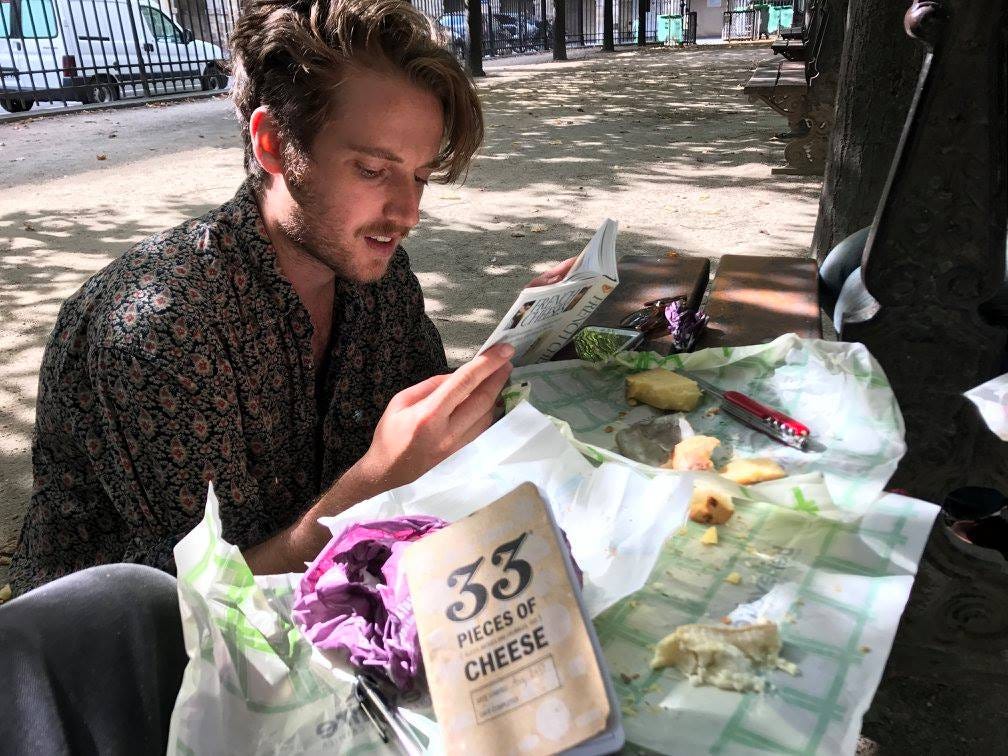
I’d brought two books with me to Paris, the first being French Cheeses: The Visual Guide to More Than 350 Cheeses from Every Region of France; I carried it everywhere, cheeses of interest circled and starred, along with a cheese journal my friend Ben had gotten me, which had flavor graphs on which to plot the different cheeses we tried2. As we bounced from town to town, from Dijon to Lyon, we’d visit nearly every cheese shop we passed, inevitably picking four or five cheeses that called to us3; we’d bring them to a park, take slow bites, discuss our thoughts, and I’d take notes in my journal. I was confident, bold, and generous with my cheese buying; at any one time, we had enough cheese to feed a French army. By the second week on the road, our bags reeked like bandaids and jockstraps from all the room temperature remains of half-eaten cheeses we’d collected — all the pudgy stinkers and sweaty, hay-colored alpines we could get our hands on. But the cheeses I loved most were the exotic ones I had not seen before: the plump rectangles and sagging pucks, ash-colored donuts and Napoleonic pyramids4. When ripe, they leaked thickly from their barely clung skins.
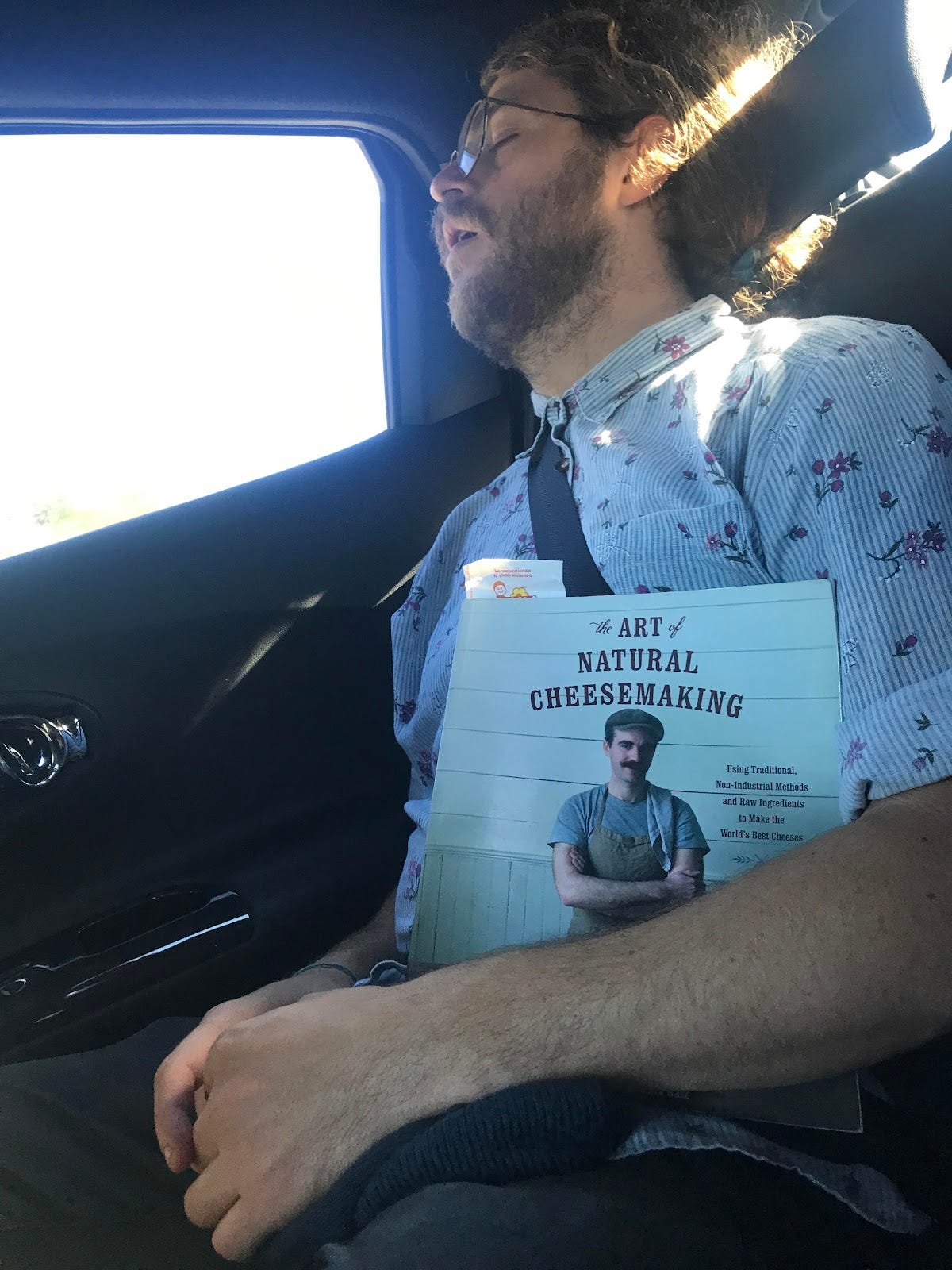
I saw these types of cheeses everywhere I went, and eventually my curiosity reached a fever pitch — I had to know how they were made and where they’d been my whole life. Kismetically, it was on the ascent into the French/Italian alps that I started working through the second book I’d brought with me: The Art of Natural Cheesemaking, by Dave Asher. The book blew my mind. I learned that these exotic cheeses I had not seen before were young, raw milk (mostly goat and sheep) cheeses that were actually illegal in the States, if aged less than 2 months. I also discovered that the way I’d learned how to make cheese — online and in cheesemaking classes — was not the only way. The technique I’d learned was the conventional way that most American cheeses are made5: by sanitizing the milk (pasteurizing it by heating it to a certain temperature for a certain amount of time to kill its natural bacteria) and then adding laboratory-produced bacteria designed to make specific cheeses. Traditionally, however, these young French Cheeses were made with much less intervention, using a starter culture created from the bacteria inherent in raw milk (similar to a sourdough starter), and nurtured through many batches of cheese. This process seemed so natural, wild, romantic — the cheeses it produced so alluring, so illicit. The Forbidden Cheese.
I knew I had to make it. I flipped through my book to find the simplest recipe I could, something I could make on the road. It was called “clabber cheese,” and it is probably one of the first cheeses made by humans: you simply allow raw milk to sit at room temperature for one to three days, then strain, salt, and flavor your newborn cheese. How? Why? Magic: when raw milk sits at room temperature, it naturally “clabbers,” or curdles, as the lactic acid bacteria present in the milk consumes the lactose (milk sugars) in the milk, and converts it into lactic acid, which in turns sours the milk and separates it into curds and whey. Let it relax, give it a squeeze, and enjoy. And according to the book, to make this cheese I only needed a few ingredients: raw milk, some sort of fine-mesh straining apparatus, and time.
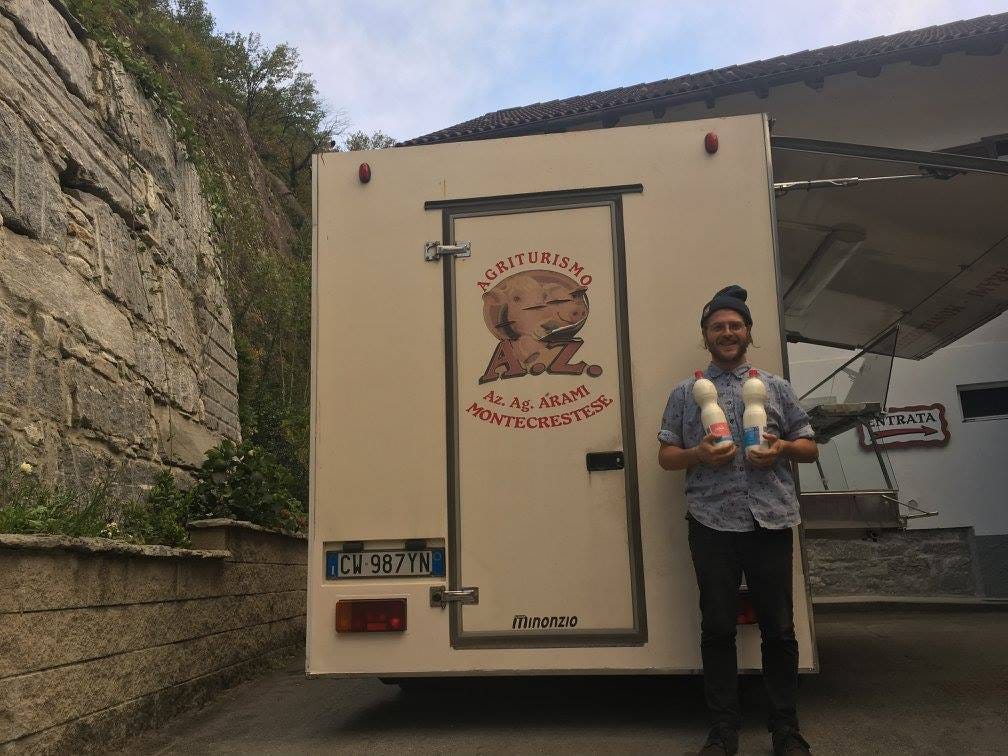
The first step was getting the raw milk, which turned out to be a lot easier in rural northern Italy than it was in New York City. We had just spent a week working in an abandoned village outside the small town of Montecrestese, where our lovely host couple spent their time renovating stone houses from the 600s and attempting to repopulate the now-deserted community. In that week, we picked fresh chestnuts, hiked an hour to a cheese shop only accessible by foot, and enjoyed one of the most cherished meals of my life (where I was introduced to lardo — a whole story in and of itself), all while the rolling thunder of dynamite blasts shook the nearby quarry. On our way out of town, our hosts gave us directions to a nearby Agritourism office — we stopped in, paid them a few euros, and walked out with two half-gallon plastic bottles full of fresh, warm raw milk.
Next we needed some sort of fine mesh straining apparatus, which we would try and find in Parma, on the milk’s first day of clabbering. Usually people use cheesecloth, a fine woven cotton cloth, to strain cheese — but with no cheesemaking supply shops in sight, we had to get creative. We wandered the cobblestone streets, drinking $1 cups of Lambrusco, eating anolini in brodo and gnocco fritto. Think, think, think. Eventually, Ben suggested we pop into an undergarment store to look for a sock, which could suffice for a strainer in a pinch. But as we perused the small store, we noticed they had a wide variety of pantyhose for sale... After inspecting several pairs (looking for unbleached cotton), and receiving many giggles and curious eyes from the ladies working there, we had found our fine mesh straining apparatus: a beige pair of fancy Italian pantyhose.
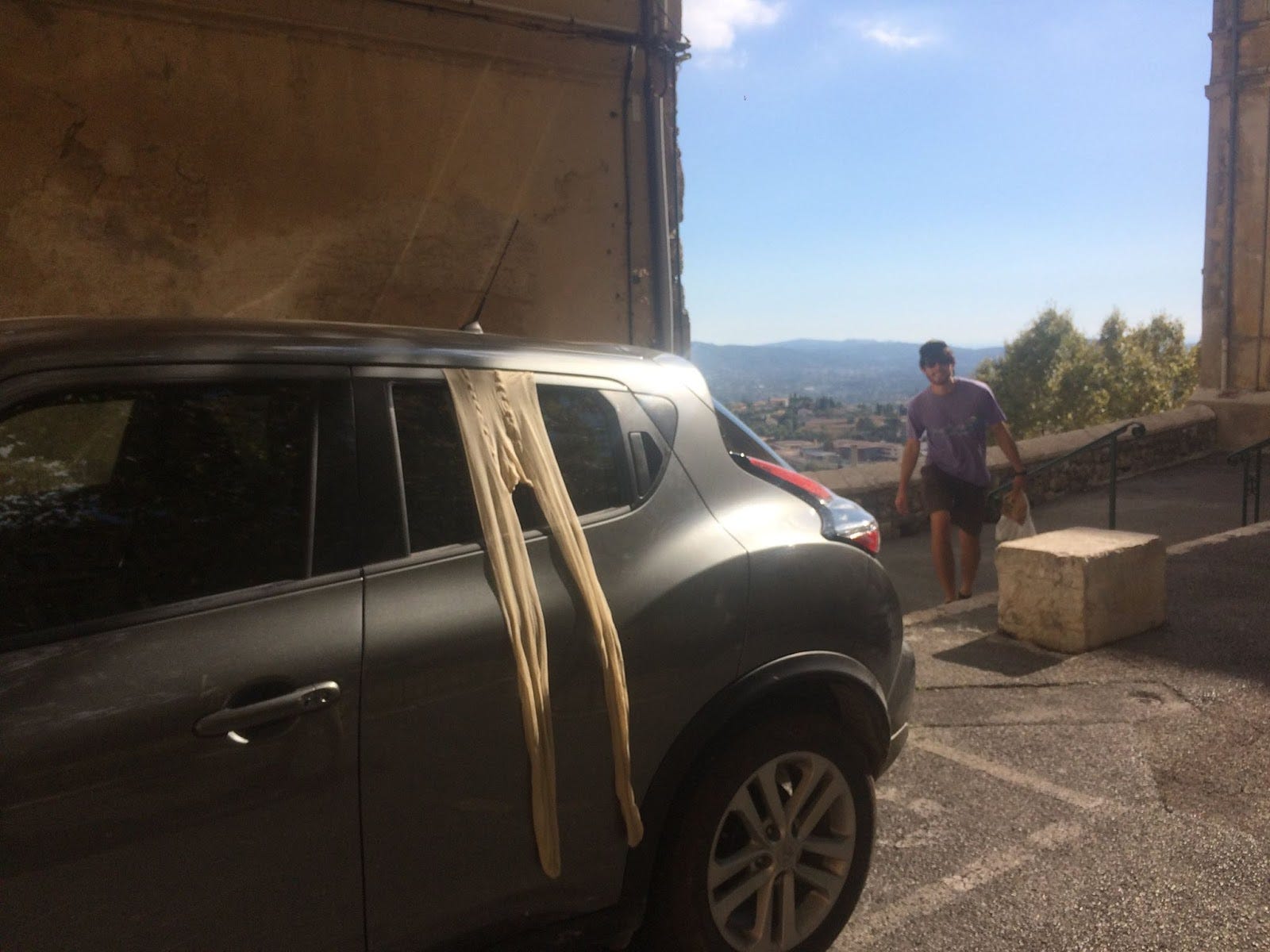
The last ingredient was time, something we had plenty of. I laid the two bottles in the trunk of our rental car (which we had named “Susan Sarandon” for some reason that I can no longer recall); there, they would sit for the next three days at room temperature, tumbling around as we drove south from the Alps to the coast of southeast France, until they turned to cheese. After our second night in Parma, the milk had thickened, but had yet to separate. I was nervous as we left town, headed west to the coast, and crossed over into France. Maybe I was in over my head. After a few hours and a lovely cheese-filled picnic on the beach (featuring a full-sized bucket of mustard we’d picked up in Dijon), we reached our next destination: Grasse. Grasse is a beautiful Provençal town perched on a steep hillside overlooking a sun soaked valley that slopes towards the sea; it’s also the perfume capital of France, and right next to the town where Julia Child wrote the second volume of her classic, “Mastering The Art of French Cooking.”
Once we settled into our cozy attic apartment, I immediately tended to my milk. After three days and hundreds of miles, my raw milk had turned to clabber and whey. Hallelujah! I had prepared The Forbidden Cheese. Wasting no time, I gently poured both bottles into one leg of my fancy pantyhose. The curds wobbled inside the leg like one of those water wiggler toys from childhood — the ones you could never quite hold on to — and then settled in the bottom of the hose, looking like a morbid, distended foot. An angel’s foot. We hung the nascent leg of cheese on a clothing rack, and let it drain for about 24 hours, giving it a nice massage every so often, encouraging the golden whey to run out of the curds and into a bowl below. A day later, much of the whey had drained from the clabber. We opened it up, added a nice palmful of salt, mixed it, and hung it back up to drain for another four hours (the salt draws more liquid out of the clabber). Four hours later, it was nearly midnight, and I was in my Sopranos muumuu, ready to put the cheese together. But not, of course, before giving it a little taste.


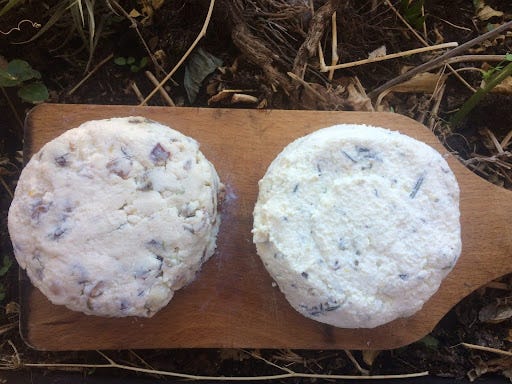
The fresh cheese was slightly creamy and a little granular, a bit sour, and had a very refreshing, milky sweetness. A success in and of itself, but with room to grow. We divided the cheese in half, and decided we would make two small wheels: one sweet, one savory. For the savory version, we added fresh rosemary, minced garlic, and some lemon zest; for the sweet, we mixed in plump raisins, chopped almonds, honey, and lemon zest. Was it the best cheese I’d ever had? Well, no. But it was so easy — so much more sensical than the conventional cheesemaking I’d done before. Simple, fresh, and created from its own inherent qualities. And I made it. I felt proud, accomplished, and as connected to cheese as I ever had. I was smitten.
The next morning we’d leave Grasse. There was dozens of new cheeses left to try and a thousand miles left to drive; we’d go mushroom hunting and get terribly lost for two hours in a dense forest outside the small town of Mirepoix; we’d eat hamburgers out of vending machines and seared foie gras in San Sebastian; in Bordeaux, I’d see that French lady I’d met in Brazil one last time, and I’d finally get the heartbreak I’d been bargaining for. I’m not sure I knew it when we pulled back into Paris, but the trip had changed the course of my life. Shoulder to shoulder with my closest friends, united by a shared curiosity and yearning for exploration, that one month, hedonistic cheese binge ignited what would become one of my deepest passions: the romance and pleasure and risk of letting food be your travel guide. By the end of the trip, we’d tried over 100 new cheeses. One hundred.

Eventually, though, we had to leave France, and the fantasy cheese world I’d been floating through came shattering down around me. Upon returning to New York, I decided to work on a dairy farm upstate in exchange for my room and board. Life on an animal farm is gritty. There was a lot of cow shit, I assisted in the killing, blood-letting, skinning, and butchery of a pig. I watched as a baby pig was castrated with a razor blade; I can almost still recall its haunting, human-like screams. I stood about five feet from a cow giving birth to another cow, looking right down the barrel as the latter — which was ill-positioned inside its mother — had to be pulled out and into this world by its legs. I can picture it now. I did get the opportunity to make some cheese — but it was made the conventional way, through pasteurization and pitching fabricated yeast, and the environment was sterile and without whimsy or romance. Ultimately, I learned that my constitution — much like a ripe Brie — is too soft for farming. That the joy of cheese for me personally was the variety and the surprise, not the stark reality of how it can be produced at scale. I didn't want to be a cheesemaker. I yearned for the pleasure I’d felt in Europe, my eyes wandered outward towards greener grass. After a month or so, I packed my things and headed to New York City.
I decided to take a job as a cheesemonger at Murray’s Cheese in Greenwich Village. There, I now had over 300 different cheeses at my fingertips — their smell and their touch beckoning me from behind a thin plastic window. My passion and interest quickly transformed to obsession. I studied cheese’s various families and methods of production, how to pair them with wines and condiments; soon, I began calling myself a "cheese boy," fancied myself an expert, and even started writing cheese recommendation columns and teaching cheese classes. I would show up to parties with a bag full of cheeses from different families, milks, and regions. More cheese than anyone should bring to a party. I had a new favorite cheese every week. It had become fused into my being, part of my personality.
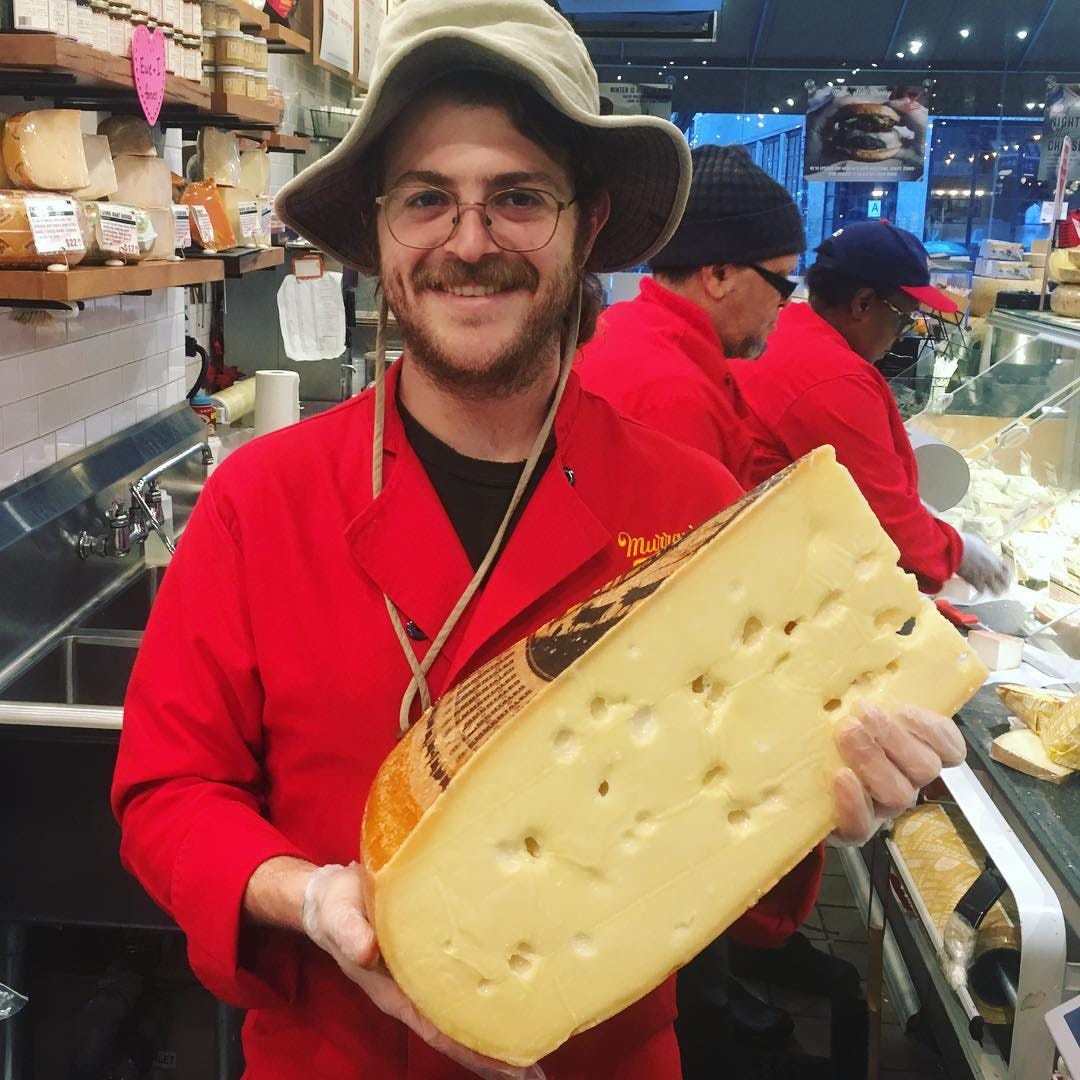
But eventually, even the massive variety at Murray’s started to bore me; I realized the quick pleasure of a new cheese could only float my boat so high for so long, and soon cheese had altogether lost its wonder. I also realized that I hated working service jobs. I grew to disdain the West Village crowd that piled into the store day after day, looking for suggestions for “a good cheddar.” After a year or so, I had become the snobby, disaffected cheesemonger that I'd always resented when I was younger and knew nothing about cheese. I was miserable. I remember one night when I was closing up, straightening the hundreds of little signs sitting on top of the many wheels of cheese, and wondering: if I replayed my life through my eyeballs, how many worn-out hours have I spent looking out at this fluorescent cheese prison. And for that matter, how high has my cholesterol gotten? I was jaded, and the romance was long gone. Shortly thereafter, I quit.
Cheese, as anything, evolves over time — and so, too, have my feelings about it. The aging of cheese can be seen as a process of controlled rotting: proteins breaking down over time and creating different flavors and textures, always in a state of perpetual change, sometimes for worse, sometimes for better. It's now been 6 years since I left Murrays, and my relationship with cheese has waxed and waned. Over the years, I’ve tried my hand at natural cheesemaking a few times, and felt glimmers of the spark I once had. I’ve found new favorites (most recently: Old Witch), and had tender reunions with familiar faces from my past. Sometimes I wonder if I will ever regain the full, electric love and passion I once had for cheese. Maybe I needed some space, maybe I was overexposed. As I write this, settling into my new place in Los Angeles, I feel nostalgic. Like the Forbidden Cheese, maybe I too needed some time. Just today, I flipped through that old book, French Cheeses: The Visual Guide to More Than 350 Cheeses from Every Region of France, and I could feel it pulling me in. I glanced at my bookshelf and saw Dave Asher's book as well, and for a moment I wondered where I might get raw milk in this new city. Perhaps that passion is right where I left it — on the streets of Paris, in a nearby cheese shop, or in a pair of fancy Italian pantyhose, hanging in an attic somewhere in Grasse.
There are only 7 producers of real Roquefort. Carles is my favorite.
The graphs looked something like this: https://www.researchgate.net/figure/Flavor-profile-diagram-of-Sepet-cheese-A-basic-taste-B-aromatics_fig4_51583956
A few months prior to the trip, I had begun trying to teach myself French. I did this for two reasons: 1) in case of communication breakdown with the French lady, and 2) to be able to ask for the cheeses I was interested in at cheese shops. So between learning things like “I missed your eyes,” and “do you have a boyfriend,” I pieced together phrases like “je voudrais un fromage très jeune, creme, et a point,” which brokenly translates to “I would like a very young, soft, and ripe cheese.” By the time I got to France, I spoke what I like to call Cheese Shop French — enough to ask for the kind of cheese you want, but too little to understand anything the cheesemonger says back to you.
As the story goes, Valençay cheeses were once full pyramids; that is, until Napoleon saw them and, reminded of defeat in Egypt, sliced off the tip with his sword.
In most cheese productions in the United States, fresh milk is pasteurized before its made into cheese. There are many methods of pasteurization (so named for its inventor, Louis Pasteur), but the most common involves heating milk to 161 degrees for over 15 seconds. This process basically sterilizes the milk, eliminating much of the milk’s natural bacteria (both good and bad), and extending its shelf life. While this innovation was well-intentioned, developed as a reaction to the exploding dairy market combined with sub-par sanitization practices that led to Listeria outbreaks, it forced cheesemakers to add laboratory-made bacteria back into the pasteurized milk in order to ferment and prepare it for the cheesemaking process. This shift led to a homogenization of the American cheese market, and was eventually codified into law by the FDA, who mandated that raw-milk cheeses be aged 60 days before they can be sold in the US. Traditionally, cheesemakers would allow the natural bacteria present in raw milk to ferment their milk, before turning it into cheese; this process allowed a greater reflection of the terroir (or, qualities of the land) in the final cheeses, and also led to some incredible, young raw milk cheeses that you can’t find in America.
Both educational and entertaining! Thank you. 😊
This is my favorite of the stories you've shared